Dubai Real Estate Market and Airline Industry Since the Iran War
Since the Iran war and attacks on Arab oil-producing nations, it has put much strain on Dubai tourism, which is a major part of the UAE economy outside of producing commodities.
Drone & Missile Attacks in Dubai
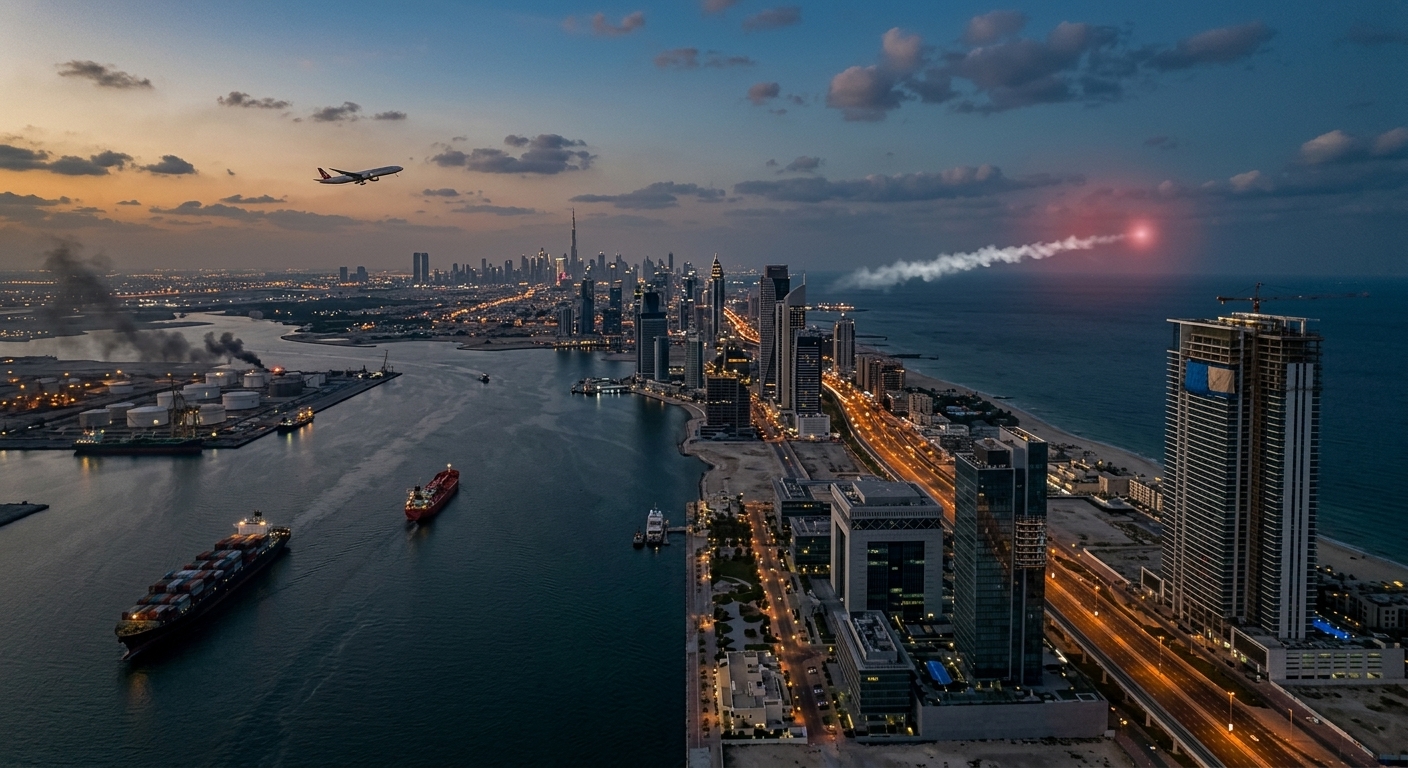
Interceptions & Strikes: Since the conflict escalated in early 2026, the UAE has faced thousands of drone and missile threats launched from Iran. While most were intercepted by US-supplied THAAD and Patriot defense systems, several strikes managed to impact high-profile infrastructure in Dubai.
Key Targets Hit: Key incidents include a drone strike causing a fire near fuel tanks at Dubai International Airport (DXB), debris-related fires at the Jebel Ali Port, structural damage to the facade of the Dubai International Financial Centre (DIFC) Innovation Hub, and a strike hitting a residential tower in Dubai Creek Harbour.
Dubai Real Estate Market & Impact
Not a Full Crash, but a Cool-Off: Contrary to claims of a total collapse, the market has not "crashed," though regional security risks have ended its multi-year bull run.
Residential Softening: Residential transaction volumes fell by around 16% year-on-year, with average residential property prices dropping modestly by 7% as geopolitical uncertainty dampened foreign buyer sentiment.
Commercial Resilience: Surprisingly, commercial property—particularly Grade-A office spaces—stayed remarkably resilient, with transaction values actually rising as firms shifted capital from land speculation into secure income-generating assets.
Supply & Sentiment Shift: The price dip is a mix of buyers taking a "wait-and-see" approach due to regional missile threats and an influx of new construction handovers scheduled throughout 2026 increasing market inventory.
Was pre-Iran war real estate/property prices like buying the top? Will people always remember that civilian infrastructure was attacked by Iran and the security became breached? Dubai prided itself that it was one of the safest places in the world, but its claims to being one of the safest places in the world was like a private estate within one of the worst neighborhoods in the world (the Middle East). It was almost like being inside a bubble. Well, sometimes in finance, bubbles burst, and this is why in investing it is often thought of as an important thing to diversify and not have all your eggs in one basket, as if the basket falls, eggs smash—and in this instance, eggs certainly smashed.
Western nationals were filming the footage of drone attacks in Dubai, and how the UAE dealt with that by arresting the very people who make their manufactured society for tourism economy possible and hide the bursting of the safety bubble is also up for debate...
Following Iranian drone and missile strikes across the UAE, federal authorities implemented zero-tolerance enforcement around filming, photographing, or sharing footage of military activity. UAE Attorney General Dr. Hamad Saif Al Shamsi and police departments issued formal warnings declaring that publishing images of strike locations, interception smoke, or structural damage compromises national defense, incites public panic, and spreads unverified information.
Legal Basis & Enforcement
Cybercrime Framework: Arrests are executed under the UAE's strict Anti-Cybercrime Law. Under these statutes, capturing or sharing content deemed harmful to public order or national security carries penalties of up to two years in prison, fines starting at AED 20,000 to AED 200,000 (~$5,400 to $54,000), and mandatory deportation for foreign nationals.
Mass Detentions: Over 180 individuals—including foreign tourists, expatriate workers, and sailors—have been detained or referred to expedited trials.
Strict Monitoring: Authorities utilize extensive CCTV monitoring and social media tracking. Cases include a 60-year-old British tourist charged after filming missiles over Dubai (despite deleting the footage upon request), a Filipina domestic worker arrested near the Burj Al Arab for photos on her phone, and a foreign sailor detained after posting Fujairah port footage online.
Brand & Economic Protection
Beyond immediate operational security, legal experts and analysts note that the government's aggressive ban aims to preserve Dubai’s global reputation as a safe, predictable business and tourism hub by preventing graphic viral footage from driving market panic.
Back to the financial aspect of it, there were lots of people who thought Dubai property/real estate is the holy grail of investing and the answer to all their prayers. But often in investing, there is sometimes a bottom and a top, and when you are late to the party, it is one thing, but turning up when the party is over and investing then can often hurt your pocket. That's why the idea is to buy bottoms and sell tops, and unless you are Nostradamus or some sort of prophet, how do you do so? We want exposure to speculative assets like crypto or Dubai real estate or property in a cool, trendy tax haven that is emerging, but we don't want complete exposure. Another thought: will a new Dubai emerge now somewhere else in the world, away from the Middle East where there are less security concerns?
Another dynamic now is that Dubai International Airport was often used as a stop-off point for international travel.
- Dubai's Displacement as the "Global Super-Hub"
The "Kangaroo Route" Diversion: For decades, Dubai International Airport (DXB) was the world's premier layover point for long-haul travel connecting Europe and the UK to East Asia and Australasia (e.g., London to Sydney or Melbourne).
Airspace Bans & Suspensions: Drone and missile threats across Persian Gulf airspace forced international long-haul carriers—including Air Canada, airBaltic, and Air Astana—to suspend or limit services to Dubai.
Strategic Shift: Fear of missile interceptions and sudden airspace closures led global aviation traffic to bypass Gulf corridors, diverting long-distance travel further north through Anatolia.
Could we now see that change?
Istanbul Airport Takes Over London Heathrow Since Dubai Has Had Its Issues With Its Neighbors
- The Rise of Istanbul Airport (IST)
Overtaking Heathrow & Surging Ahead: Istanbul Airport (IST) capitalized on Dubai's operational constraints. By 2026, Istanbul Airport handled over 8.15 million monthly passengers, officially dethroning London Heathrow (LHR) as Europe's busiest aviation hub and taking a commanding share of international transfer traffic.
Geographic & Capacity Advantage: Istanbul sits at the natural intersection of Europe, Asia, and Africa. With three simultaneous runway operations and continuous solar-powered infrastructure expansion, Turkish Airlines' home base became the preferred, safe secondary stopover for travelers flying between Western capitals and the Asia-Pacific region.
- Global Travel Repivoting
Longer Routes, Higher Fuel Costs: Bypassing Gulf airspace means long-haul flights from Europe to Australia now frequently route via Istanbul, Central Asia, or southern maritime routes over the Arabian Sea. This adds flight time and fuel consumption but ensures conflict-zone avoidance.
Structural Market Shift: While Emirates and flydubai maintain core routes, the broader global network has permanently adapted. Airline alliances have reorganized code-share agreements to route international traffic through Istanbul rather than relying entirely on Dubai as the singular gateway between East and West.
In finance, it is often thought that there is no new wealth creation, but more like rotation. Some wealth from Dubai Airport has clearly shifted to Turkey's Istanbul Airport with a surge in demand, but is that permanent, or is Istanbul like a temporary bus station? If it is a permanent thing, could we maybe see a surge in demand for Istanbul real estate/property and much more development? And if that is the case, could Istanbul be like the new buying the bottom in the international housing market? That does not mean to say Iran could not shift to having issues with Turkey over their relationship with the West and new-found influx of investment.