Labor Market Trilogy Finale: Pre-NFP Volume Dips as Traders Await High-Impact Catalyst
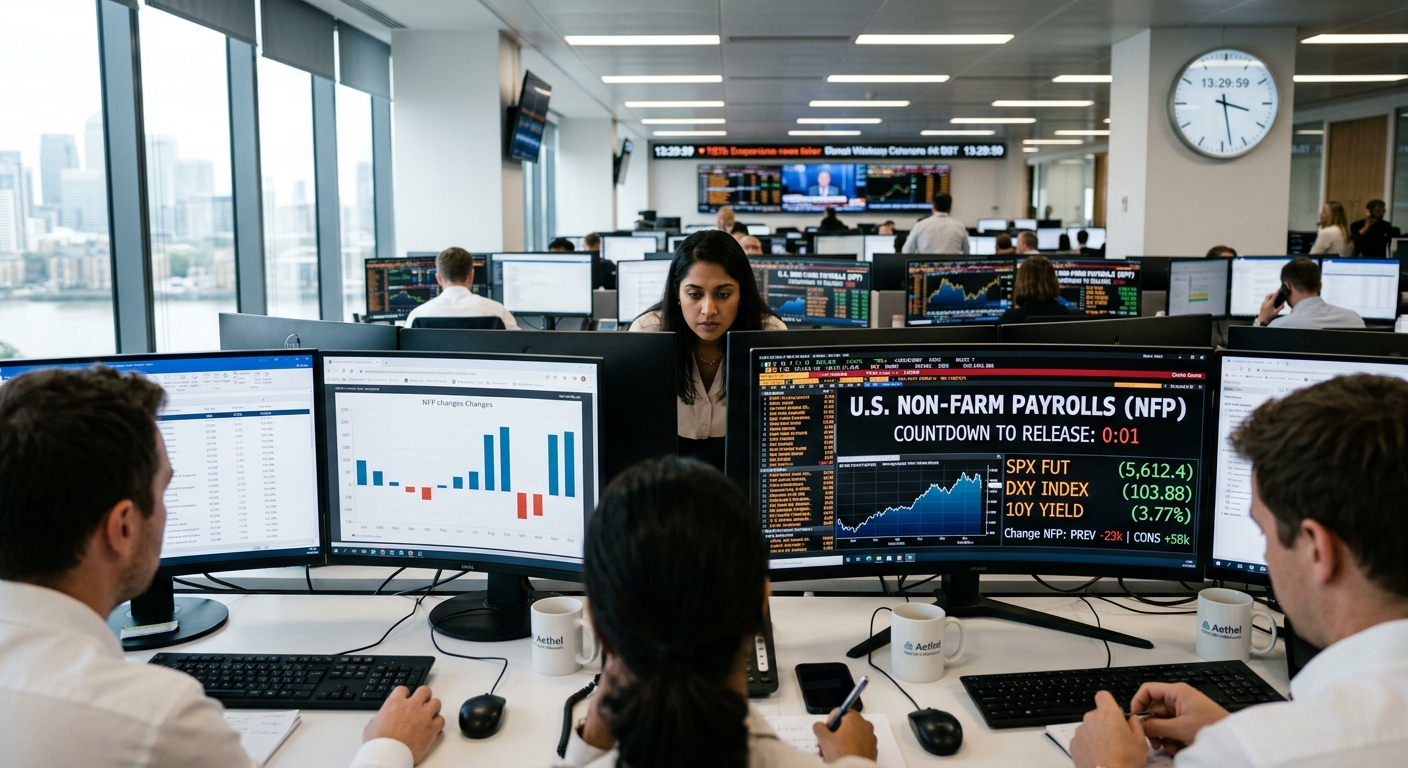
The third episode in the trilogy of labor market data lands tomorrow and is the main pay-per-view event as a lagging indicator and heavyweight high-impact news catalyst: Non-Farm Payrolls (NFP). With ADP and initial jobless claims showing a slightly cooler labor market, could it be a slightly cooler NFP?
August 2026 NFP Report Details
The official U.S. Non-Farm Payrolls (NFP) report for August 2026 releases tomorrow, Friday, September 4, 2026, at 8:30 a.m. Eastern Time (1:30 p.m. BST). Headline Expectations & Consensus
Non-Farm Payrolls: Consensus forecasts expect +50,000 to +58,000 jobs, representing a modest rebound from July’s unexpected contraction of -23,000 jobs.
Unemployment Rate: Projected to hold steady at 4.1%.
Average Hourly Earnings: Expected to rise +0.3% MoM, bringing the annual wage growth rate to around 3.0% to 3.2% YoY.
Key Macro Drivers
Key Labor Market Drivers
Preceding Indicators: Softness in Wednesday's ADP private payrolls (+38k vs. +48k expected) and cooling JOLTS hiring figures point toward reduced underlying labor demand.
Fed Policy Context: Coming after Fed Chair Kevin Warsh's hawkish tone at Jackson Hole, tomorrow's print is the final major labor indicator before the FOMC's rate decision on September 16.
Market Impact Scenarios:
NFP Market Impact Scenarios
Hot Print (>80k jobs / sticky wage growth): Validates hawkish Fed expectations, driving up U.S. Dollar strength and Treasury yields while pressuring equity and index futures.
Soft Print (<30k jobs or negative): Confirms structural labor market slowing, putting downward pressure on the dollar and yields while boosting rate-sensitive assets.
The Pre-Data Lull and Market Psychology
Could it be cooler labor market data, and is bad news good news in macroeconomic data once again? Investors and traders do not know until the data drops, as if that were the case, people would place their positions now—and doing so would be worse than going to the casino.
News traders do not predict the data; they react to the data, which is why there is such low trading volume prior to the data release. Another thing to consider is how much of the cooling in the labor market data was a slowing economy and how much was ai replacing the labor market .