
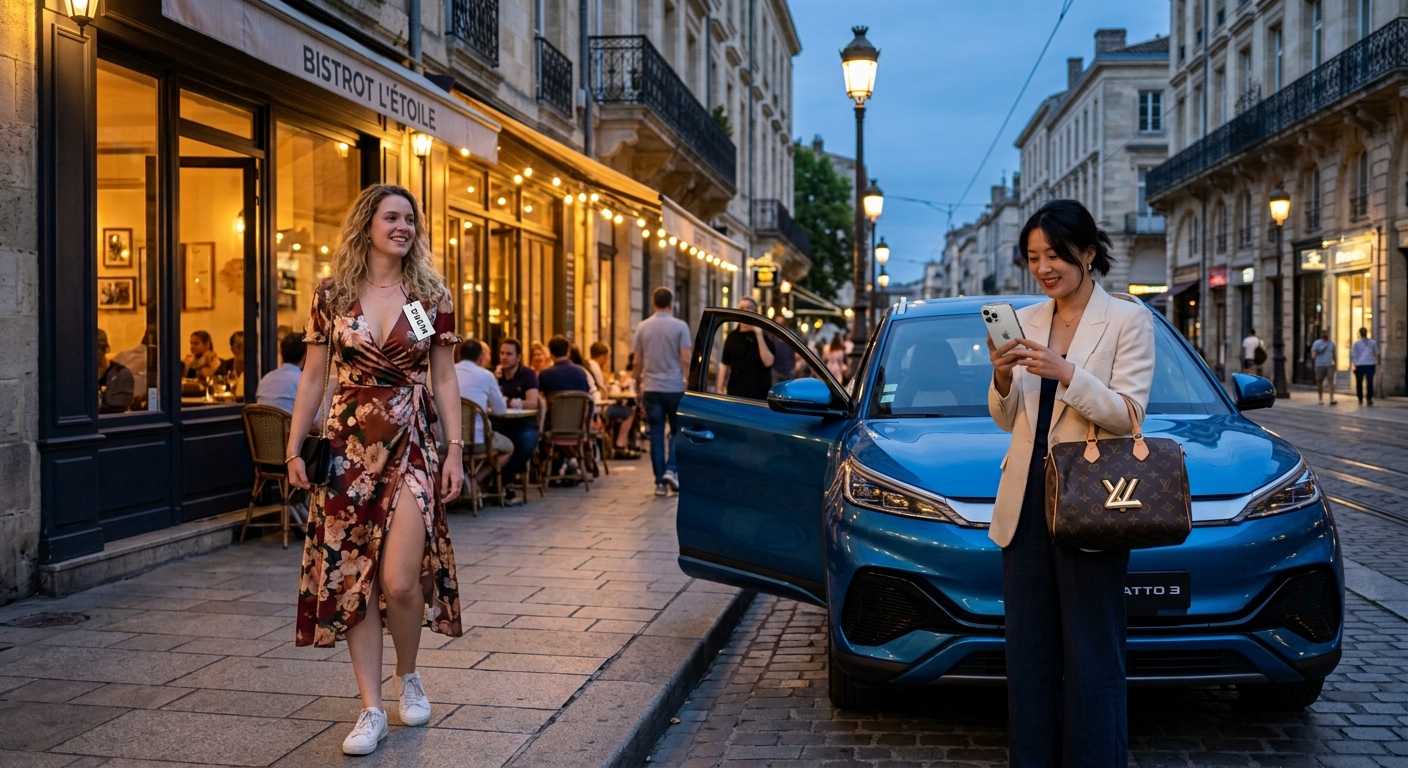
Price vs. Heritage: Can Chinese Industrial Scale Overcome Western Brand Equity?
A current battle in economics is Chinese state-backed companies producing great products that are sometimes considered better than Western alternatives for a fraction of the price. We are not talking about a toaster off Temu here; we are talking about amazing Chinese-made products that disrupt whole industries and stock indices in those places.
For example, BYD has recently disrupted the EU economy, challenging German automotive giants like Volkswagen Group. But can a Chinese alternative really replace VW, which is so much a part of society for so many generations, like the hot hatch Golf GTI or the VW Volkswagen camper van? The Scale vs. Premium Spectrum
Chinese Rivals Challenge Western Giants
BYD vs. Tesla and Chinese Smartphone Makers (Huawei, Xiaomi) vs. Apple represent two sides of the same broader macroeconomic trend: domestic Chinese champions leveraging massive local scale, vertical integration, and aggressive price-to-performance ratios to challenge established Western tech giants. BYD vs. Tesla: The Global EV Scale Battle
Volume & Delivery Leadership: BYD has overtaken Tesla in overall vehicle deliveries, leveraging a dual strategy of pure battery-electric vehicles (BEVs) and plug-in hybrids (PHEVs). In full-year 2025, BYD delivered 2.26 million BEVs compared to Tesla's 1.64 million, maintaining its lead into 2026.
Revenue vs. Profit Margins: While BYD’s massive scale pushed its full-year revenue past Tesla's ($116B vs. $94.8B), domestic price wars in China have compressed margins across the board. Tesla maintains a significantly higher Wall Street valuation due to investor bets on software, autonomous FSD/robotaxis, and robotics rather than raw unit volume.
Target Segments & Global Footprint: BYD competes in entry-level and mass-market price brackets (starting near $20,000 globally), whereas Tesla operates in premium segments with an average selling price above $40,000. Both companies now hold roughly equal market share (~2.4%) in Europe as BYD rapidly expands its overseas footprint.
Chinese Smartphone Makers vs. Apple: The Premium Domestic Push
Domestic Market Rivalry: In China, local OEMs led by Huawei, Xiaomi, vivo, and OPPO exert intense pressure on Apple. Huawei's resurrection—driven by indigenous Kirin silicon and the HarmonyOS ecosystem—has re-established it as a top contender in China’s premium market segment.
Pricing & Value Strategy: Local Chinese brands dominate volume by offering flagship-level hardware (advanced camera setups, high-density silicon-carbon batteries, and rapid charging) at lower price points, while Apple relies on heavy promotional discounts and trade-in programs during major retail cycles to preserve iPhone market share.
Ecosystem Lock-In: While Apple maintains dominance in high-margin global profits and cross-device ecosystem retention, Chinese manufacturers are bridging the gap by expanding into consumer IoT, smart home, and EV integration (e.g., Xiaomi's car-to-phone ecosystem).
Core News Takeaway: Both battles reflect a structural shift in consumer hardware. Western incumbents (Tesla and Apple) retain the edge in brand equity, high-margin software ecosystems, and market capitalization, while Chinese competitors (BYD, Huawei, Xiaomi) win on manufacturing agility, localized software features, and aggressive pricing across emerging and domestic markets.
Emotional Branding and Luxury Prestige
Luxury Brand Prestige in China
With branding, it is often not all about which is the best or cheapest product, but which brand people attach their emotions to. For example, in China, consumers could easily buy cheap handbags produced nationally, yet the Chinese consumer has a massive demand for French luxury goods such as LVMH (Louis Vuitton), a French heavyweight company in the CAC 40 French stock index. The Rise of French Luxury Handbags in China: Historical Expansion
Over the past three decades, the appetite for French luxury leather goods—led by iconic houses such as Louis Vuitton (LVMH), Hermès, Chanel, and Dior—transformed China from an emerging market into the central engine of global luxury growth.
The Entry & Market Seeding Era (1990s–Early 2000s):
First Movers: Louis Vuitton opened its first boutique in Beijing at the Palace Hotel in 1992, followed by Hermès and Chanel establishing early footholds in major Tier-1 metropolises (Beijing, Shanghai, Guangzhou, Shenzhen).
Status Symbol Formation: As China’s economy opened up, French leather goods were quickly adopted as the ultimate visual symbol of status, wealth, and professional achievement among the country’s burgeoning business elite.
The Middle-Class Boom & Retail Explosion (2008–2019):
Urbanization & Wealth Creation: Rapid GDP growth and real estate wealth created tens of millions of upper-middle-class households, driving explosive, double-digit annual sales growth for high-end French leather goods.
Flagship Expansion: Brands built monumental flagship stores across Tier-2 and Tier-3 cities, turning luxury shopping malls into cultural and architectural landmarks.
The "Daigou" & Overseas Shopping Era: A massive portion of Chinese demand was captured abroad via international travel or grey-market daigou shoppers (purchasing directly in Paris or Europe to leverage price/tax differentials).
The Pandemic Local Boom & Domestic Consolidation (2020–2022):
Repatriated Spending: Global travel restrictions forced Chinese consumers to buy domestically. Duty-free hubs like Hainan Island and local boutiques experienced record-breaking sales volumes.
Digital Integration: French maisons adapted to local digital ecosystems, building sophisticated mini-programs on WeChat, Tmall Pavilion storefronts, and Xiaohongshu (RED) engagement pipelines.
Pricing Power & Asset-Class Perception:
Unprecedented Price Increases: Top French houses systematically raised retail prices multiple times a year on signature handbags (such as the Chanel Classic Flap or Hermès Birkin/Kelly).
Handbags as Investments: Iconic French leather pieces developed a reputation among Chinese buyers as store-of-value assets, maintaining elevated resale value on domestic secondary and pre-owned platforms compared to non-French competitors.
Trust and Brand Reputation
Trust, Security, and Institutional Friction
It is an interesting dynamic: the cheaper, better-produced product versus iconic branding. Yet, can some things also come down to trust and reputation, not just in the interest of national security, but as far as security of the product itself? For example, Apple with its hardware does not just have brand recognition for being an icon, but for security as well.
Another narrative recently with this same debate is Shein, with it failing to IPO in the West on the New York and London stock markets, and also failing to debut on catwalks in the fashion capitals of the world. Shein’s Prolonged IPO Odyssey: New York to London to Hong Kong
The Failed U.S. Attempt (2023–2024): Shein initially filed confidentially to list on the New York Stock Exchange in late 2023, seeking valuations near $90 billion. However, intense bipartisan political opposition in Washington regarding labor supply chain audits, forced-labor allegations, and tax loopholes (de minimis exemptions) effectively stalled the U.S. listing.
The Delayed London Pivot (2024–2025): Shein subsequently shifted focus to the London Stock Exchange, receiving preliminary regulatory approval from the UK’s Financial Conduct Authority (FCA) in early 2025. The float was repeatedly delayed due to lack of clearance from Chinese securities regulators (CSRC) and pressure from European lawmakers over environmental standards.
Hong Kong Debut (September 2026): After pivoting listing plans for a third time, Shein officially went public on the Hong Kong Stock Exchange on September 1, 2026. The IPO raised roughly $1.77 billion, giving Shein a final valuation of ~$26.5 billion—a significant drop from its peak private valuation of $100 billion in 2022.
Rejection on Western Catwalks and Fashion Capitals
Paris Physical Store Resistance: In late 2025, Shein attempted to establish its global footprint by launching a permanent retail location at Paris’s historic BHV department store. The opening sparked protests outside the building, condemnations from Paris City Hall officials, and protests from local designers pulling their merchandise from the store.
Regulatory Bans & Legal Crackdowns: French and European authorities initiated formal proceedings against Shein over consumer law violations, microplastic emissions, and illegal marketplace listings, forcing temporary suspensions and multi-million euro regulatory fines.
Exclusion from Official Fashion Weeks: Western fashion capitals (Paris, London, Milan, and New York) have barred ultra-fast fashion platforms from participating in official Fashion Week catwalk calendars, citing incompatibility with sustainability benchmarks, intellectual property protections, and high-fashion industry ethics.
The "Two-Speed" Market Reality: Despite backlash from heritage designers, politicians, and industry trade bodies, Shein continues to generate billions in European revenue, highlighting a widening gap between high-fashion establishment standards and mass-market consumer demand.
The Role of Disposable Utility in the Modern Economy
In the West, Shein is known as a brand where a lady may wear the dress on holiday as cheap evening wear. But what that points towards are two things: she is not being seen out in that attire in the local places where she is from, and it is just for that one holiday or vacation. Is that like a disposable lighter—almost throwaway, to reorder another Shein dress for the next trip?
This would typically be associated with working-class and lower-income households, where she could look like a million dollars in a Shein dress for the price of not much more than the cloth. For this reason, it is not iconic. Just as a Chinese hot hatch would not be as iconic as a VW Golf, or a smartphone produced in China like the Apple iPhone (the creation of the late, great Steve Jobs), all that said, these Chinese products still seem to have their place within the economy.