
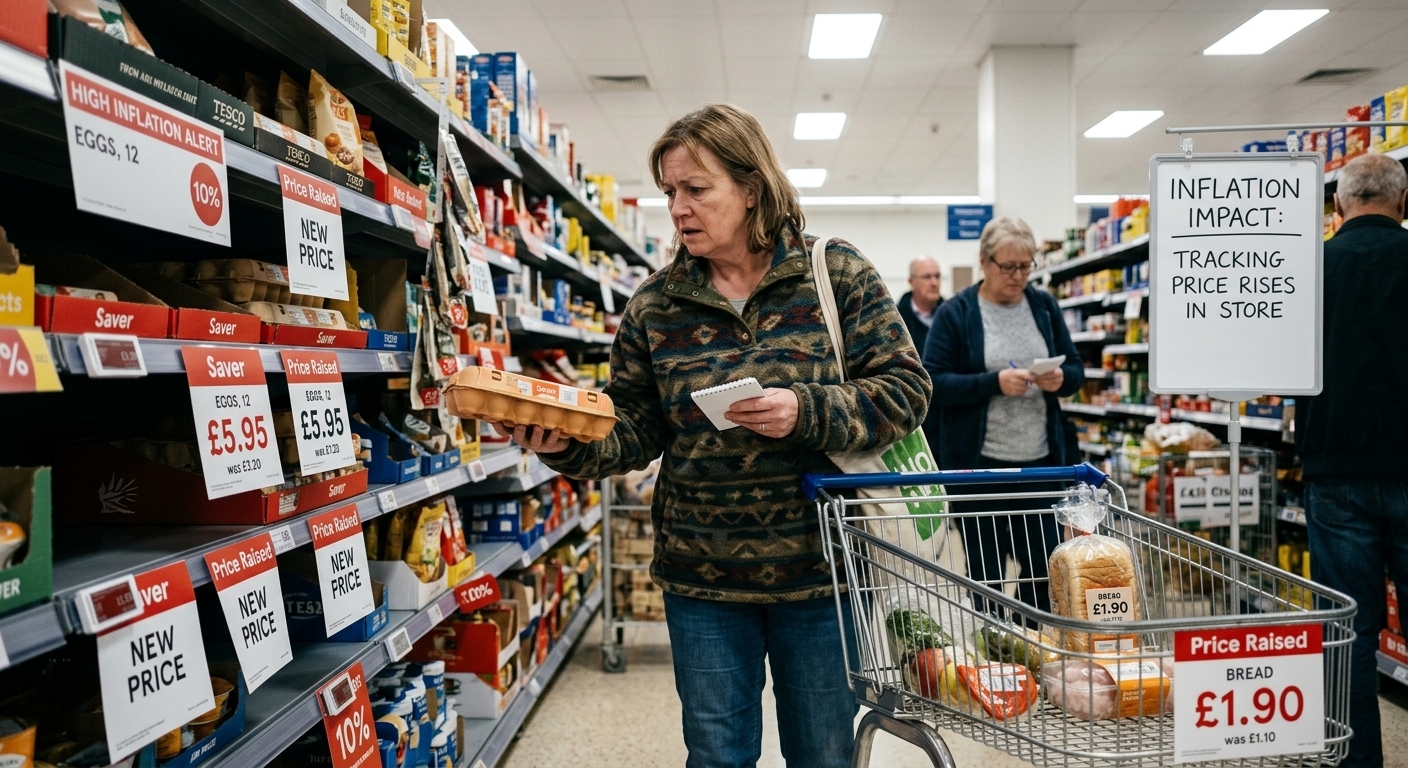
UK Inflation Resurgence Puts Bank of England and Borrowers on High Alert
Headline Rate: UK Consumer Prices Index (CPI) inflation rose to 2.9% in the 12 months to July 2026, up from 2.6% in June. This marks the highest level in four months.
Core CPI: Core inflation (excluding energy, food, alcohol, and tobacco) remained unchanged at 2.6%.
Primary Drivers: The uptick was primarily driven by higher domestic energy and utility costs following recent increases in household energy tariffs. Services inflation moderated slightly to 3.4%, while grocery inflation slowed to 2.1%.
UK Inflation Drivers and Outlook
Outlook: The Bank of England projects inflation could reach around 3.2% later this year as global energy volatility continues, leaving rate setters cautious about the pace of future interest rate cuts. Implications for Borrowers and Property Markets
With inflation in the UK sticky and looking to rise, it is a difficult position for the Bank of England (BoE) regarding its stance on setting borrowing costs. People will have their eyes closely focused on this, from enterprises looking to lend to homeowners managing their mortgages.
More so, first-time buyers looking to time their first purchase and people who are over-leveraged on property need to be very careful if inflation persists and the Bank of England takes a hawkish stance.
Inflation's Impact on Borrowers
The UK is in a unique position when it comes to inflation, characterized by a lack of energy independence, a high population-to-land ratio, and significant demand from individuals and startups looking to be positioned in the country, especially in London. The Social and Psychological Cost of Persistent Inflation
Inflation has been sticky in the US, the UK, and globally now for five years. In the UK, it is the working-class people—lower-income households—who certainly suffer more than anyone else when it comes to higher prices on goods and services.
Persistent Inflation's Social Cost
As noted previously, inflation can operate as a self-fulfilling prophecy driven by the collective psychology of the population—a phenomenon that even economists do not fully understand and clearly cannot control.
This raises a critical question: as high inflation has now persisted for five years, are people simply getting used to it? If so, could rising consumer confidence accidentally spark further inflationary pressures?