
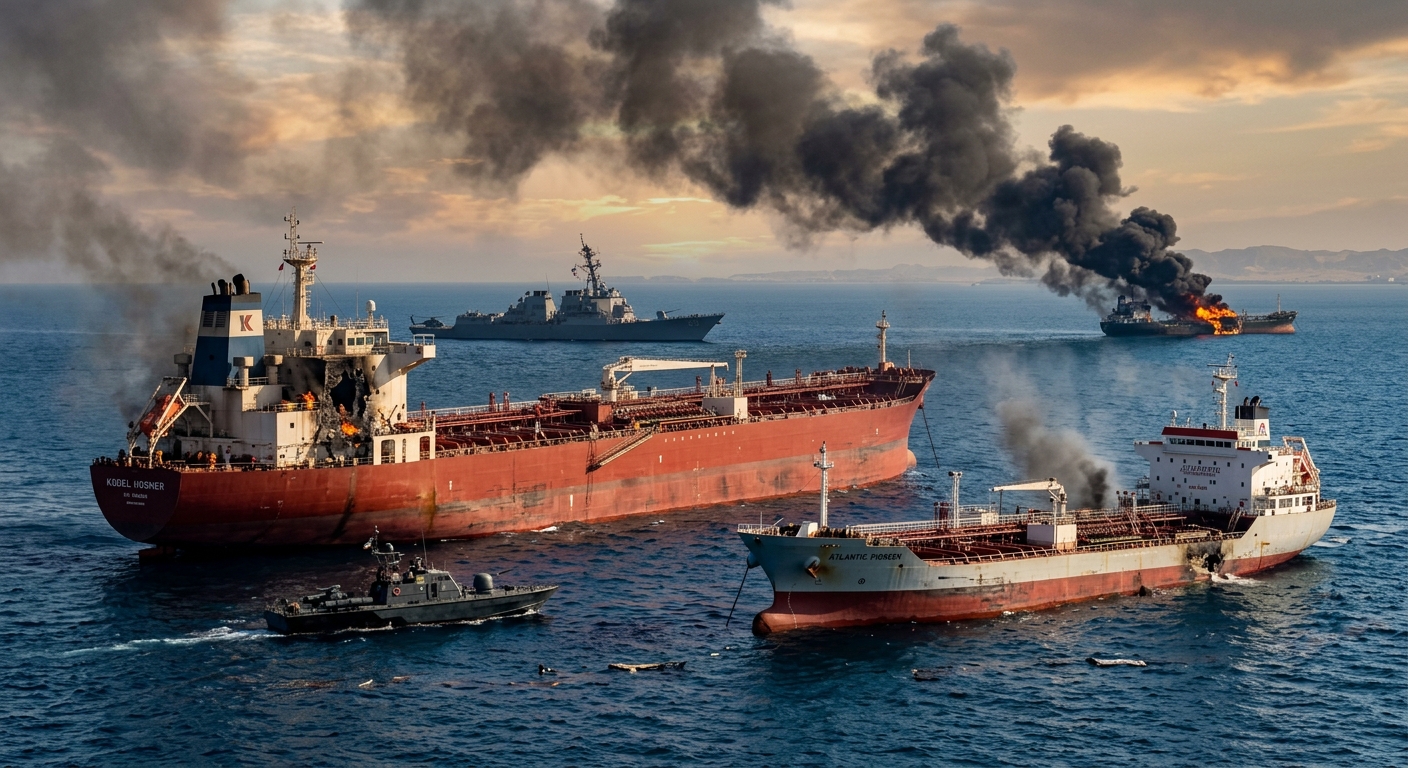
The conflict in the Strait of Hormuz has escalated, marked by direct military exchanges between US Central Command (CENTCOM) and Iran's Islamic Revolutionary Guard Corps (IRGC) targeting oil shipping infrastructure. Recent Developments
US Responds to IRGC Attacks
US Retaliatory Strikes on Iranian Fleet: Following an incident where IRGC forces launched ballistic missiles at two US Navy warships (an aircraft carrier and a guided-missile destroyer), US forces responded by targeting and disabling three Iranian crude oil carriers linked to the IRGC's transport network.
Vessels Disabled & Destroyed: CENTCOM disabled the M/T Downy off Kharg Island (Iran’s primary crude export hub) and the M/T Stark off Jask, while completely destroying the unladen tanker M/T Kylo in the Gulf of Oman after ordering its crew to evacuate.
Iran Warns Unapproved Shipping
Iranian Countermeasures & Warnings: The IRGC claimed retaliatory strikes against three tankers navigating what it classified as "unauthorized routes" in the strait, issuing direct warnings that unapproved maritime traffic in the Persian Gulf will be targeted.
Strait Bottleneck & Price Hikes
Commercial Shipping Bottleneck: The military exchanges have reduced maritime transit through the Strait of Hormuz to historical lows, exacerbating broader global energy supply pressures and pushing US diesel and global crude prices sharply higher .
After this recent escalation oil prices are little changed but could that be with thinned market volume with US holiday and the CME Chicago mercantile exchange futures closed and could that have been a strategic tactic off president Donald trump to attack when markets are closed , because as we know its possible that global markets dictate people , people do not dictate global financial markets .