PCE Price Consumer Expenditure Data
US inflation data—the Fed's preferred gauge of inflation—came in slightly less hot than the last data print, but still in line with economists' expectations with no deviation in the data. Although markets seem to be happy about it, with a risk-on tone: the dollar down, the euro up, and the US stock market being bought.
Core PCE: Ticked down slightly to 3.3% YoY (from 3.4%), remaining flat in the 3.3%–3.4% range where it has stalled for months.
Consumer Resiliency: Real spending held up (+0.4% MoM), but the savings rate dropped to 2.7%—the lowest level since mid-2022—showing consumers are pulling from savings to absorb higher costs.
Kevin Warsh already said in the FOMC minutes that one good inflation print is not enough and they need to see continued movement down to 2% and to stay there. Global Context: UK & European Inflation
The UK CPI inflation rate fell to 2.6% YoY in June 2026 (down two ticks from 2.8% in May). UK inflation recently also did similar.
UK Drivers: The drop was primarily driven by falling motor fuel prices, early summer sales discounts on clothing, and easing food prices. However, Core CPI remained sticky, holding flat at 2.6%.
Other European Countries & Eurozone
Inflation across Europe has generally mirrored this downward tick for June, though headline figures remain above central bank targets:
Eurozone (Overall): Eased to 2.8% YoY in June 2026 (down from 3.2% in May). Energy price growth slowed significantly to 8.5% (down from 10.8% in May), while services inflation cooled slightly to 3.2%.
Germany: Ticked down to 2.5% YoY (down from 2.8% in May), helped by cheaper energy imports and lower travel-related costs.
France: Eased to 2.3% YoY (down from 2.6% in May), benefiting from slowing food and manufacturing goods inflation.
Spain: Dropped to 2.7% YoY (down from 3.0% in May) as fuel prices pulled back.
Central Bank Dynamics & Energy Pressures
Not only the Federal Reserve (US Central Bank), but also the BoE (Bank of England) with the pound, and also the ECB (European Central Bank) with the euro, will be looking closely at inflation data in order to make their decision on interest rates on their currencies—yet not only inflation data, but the strength of the labor market and the confidence of the consumer.
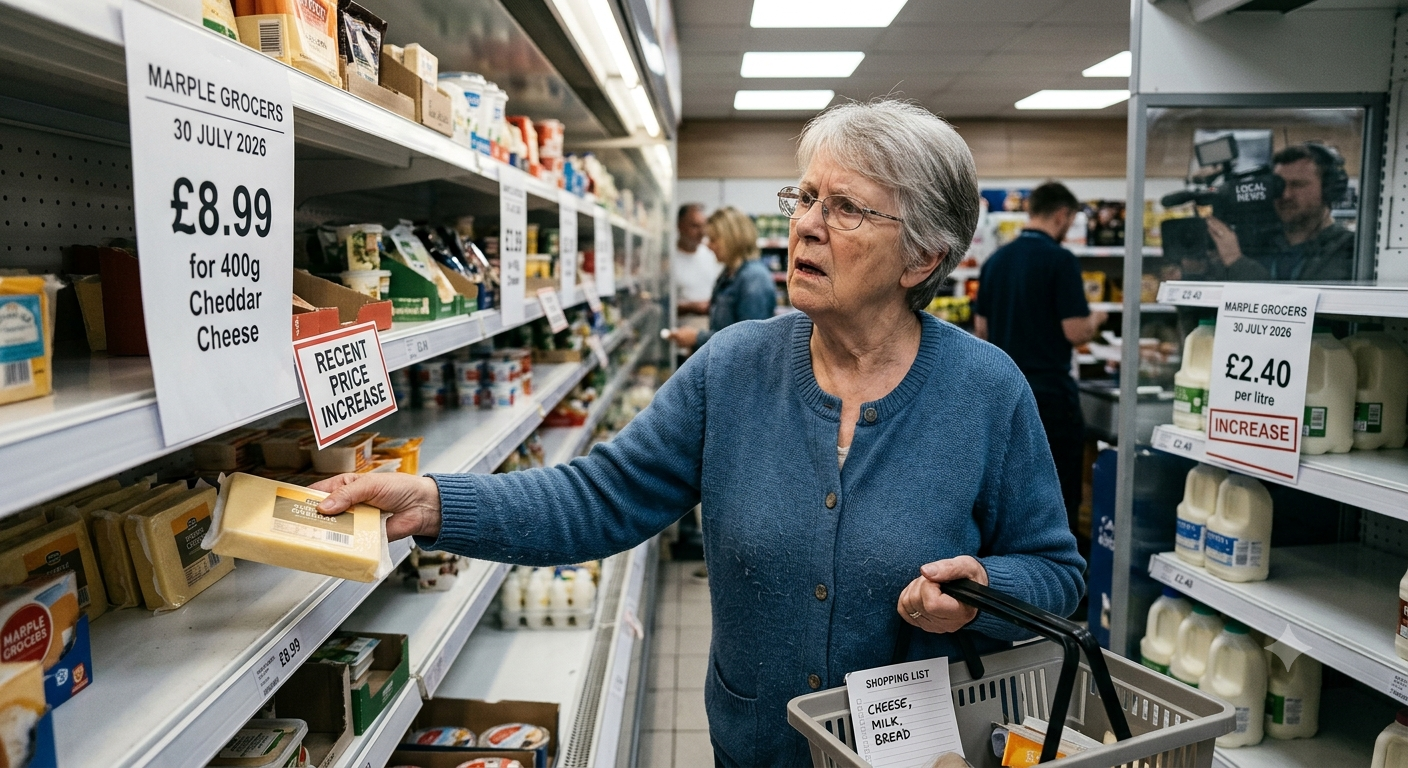
Whatever way we look at it, it seems as if geopolitics in the Middle East and the US-Iran war are driving the price of oil, then the price at the pump, and then the price of goods and services is not far behind. Particularly in the US, beef, tomatoes, and lettuce will be felt at the store:
Ground Beef: Up 21.8%, with overall beef and veal prices up nearly 12% to 16% YoY.
Why: The U.S. cattle herd dropped to its lowest inventory level since 1951 due to multi-year droughts and high feed costs, severely restricting beef supply while consumer demand remained high.
Fresh Lettuce: Up 32.1% YoY, alongside Fresh Tomatoes at 19.5% YoY.
Why: Extreme weather events (droughts and heatwaves in key growing regions like California and Mexico) disrupted crop yields, compounded by higher transport and fuel costs.
Looking Ahead
The base case is that the war in Iran will be settled and inflation will come down, but remember it tends not to come down as quick as it spiked, often described as sticky inflation. Demand elsewhere—like new technology industry build-out—could keep it hovering around a certain inflation percentage.
Also remember: inflation is a self-fulfilling prophecy and partly led by the emotion of the collective.