Anthropic Scanning Books Then Discarding Them: Is It Right or Wrong? More Controversy from Big Tech Companies with Anthropic's Project Panama Anthropic, "Project Panama," and Book Scanning
Anthropic has been at the center of landmark legal developments over its use of copyrighted books to train AI models:
The $1.5 Billion Class-Action Settlement (Bartz v. Anthropic): In mid-2025/early-2026, Anthropic agreed to a $1.5 billion settlement—the largest copyright recovery in U.S. history—to resolve a class-action lawsuit brought by authors and publishers. The lawsuit stemmed from Anthropic previously downloading copyrighted books from pirated "shadow libraries" (such as LibGen and Pirate Library Mirror) to build its training datasets.
Legal Ruling on Fair Use vs. Acquisition: The judge in the case issued a mixed ruling: using books to train AI models was recognized as transformative fair use, but downloading pirated copies to acquire that data was deemed illegal copyright infringement. The settlement compensated eligible authors/publishers roughly $3,000 per claimed work.
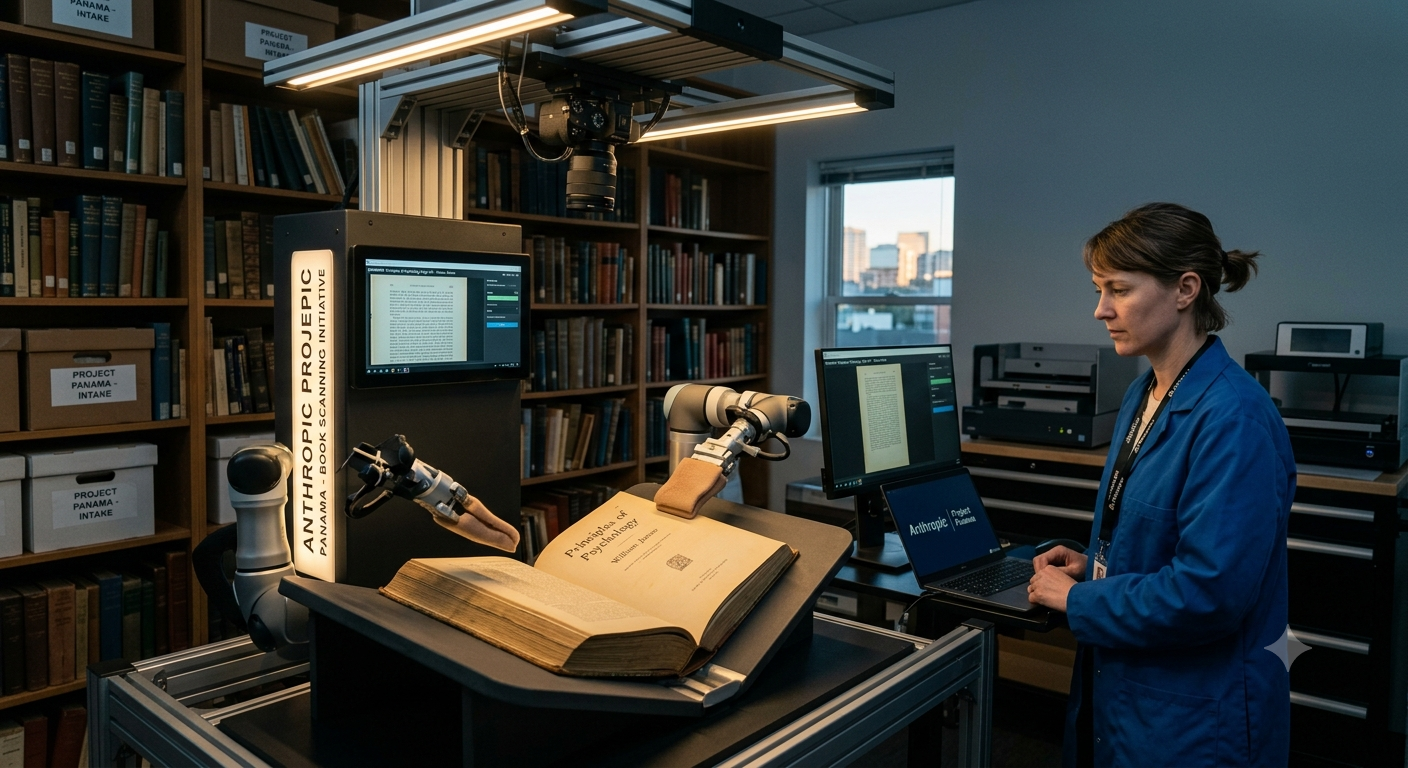
"Project Panama" & Destructive Scanning: Court filings revealed that to bypass pirated downloads while legally sourcing high-quality text, Anthropic launched an internal effort code-named "Project Panama". The company hired a former Google Books executive to buy millions of physical used books in bulk, slice off their spines, scan the loose pages into OCR text for model training, and send the remains to be recycled.
Corporate Morality and the Scrutiny of Big Tech
Sometimes in capitalism things can turn out to be legal and above board the way a company goes about things, but whether it is morally and ethically right or not is another debate.
We have seen throughout the years that how a corporation conducts itself within morals and principles is a massive thing, and will affect how a good majority behave as far as the use of their product or service, as well as investment in their shares on the market. Big tech, more than anyone, gets massive scrutiny from the people, especially regarding data. Yet they are so large and powerful it often seems they are unstoppable, following a cycle where they go through court proceedings, pay out a settlement which at their share price valuations does not touch them, rebrand their behavior, and carry on.
Anthropic currently has a valuation north of $800 billion dollars and did have a valuation of over one trillion dollars at the U.S. stock market high. It's rumored that by 2030, with compute possibly replacing the labor market, Anthropic and its Claude artificial intelligence models could be the world's economy. CEO Dario Amodei filed for an initial public offering (IPO) on June 1st, 2026 with the U.S. Securities and Exchange Commission (SEC), and shares could appear on the Nasdaq as early as October 2026. The Historical Precedent: Google Books
It's not the first time this has happened. If anyone remembers Google Books and how that upset people:
In 2004, Google launched its "Library Project" (Google Books), aiming to digitize tens of millions of books in partnership with major university libraries. Why People Were Upset
Mass Digitization Without Permission: Google scanned entire copyrighted books without asking authors or publishers for prior consent, relying on an "opt-out" policy instead of asking for permission upfront.
Copyright Infringement Concerns: Authors and the Authors Guild accused Google of "massive copyright infringement", arguing that creating digital copies of their protected IP threatened their livelihoods.
Commercialization & Monopoly: Critics argued Google was using authors' work to drive ad revenue and dominate search traffic, while risking exposure of digital files to online piracy.
The Legal Battle & Outcome
The Lawsuits (2005): The Authors Guild and major publishers sued Google. A proposed $125 million class-action settlement was rejected by a federal judge in 2011 over antitrust and fair-use concerns.
Final Ruling (2015–2016): The courts ultimately ruled in Google's favor. The 2nd Circuit Court of Appeals ruled that displaying short "snippets" for search purposes was a transformative fair use that benefited the public without substituting the market for original books. The U.S. Supreme Court declined to overturn the ruling in 2016.
Data Ownership vs. Compute Power
One of the big debates, whether it's Google or Anthropic or the next company, is that the people trained their systems/models and provided the data for free with no royalties back to society. One could argue as big tech gets richer, the wealth divide gets greater, with little or no regard for this from the big tech companies.
With Google's market capitalization sitting at around 4.6 trillion U.S. dollars, to put that in perspective, the UK economy by 2026 valuation is less than that at 4.2 trillion. Yet when we compare it to economies like South Africa, Google is 11 times the value, which shows you the sheer power these big tech "Magnificent Seven" companies have and their market cap valuations.
We know that they have been buying a lot of money's worth of computing power in hardware from companies like NVIDIA, but the question with AI is: are we paying for computing power, or the data which humanity already owns?