
Global Supply Chains and Climate Risks: China's Floods, Infrastructure Challenges, and the Macro Picture
With China being the world's manufacturing hub—described as the world's factory—could natural disasters cause supply chain issues? And does that then filter into Western corporate earnings reports and overall inflation, furthermore driving up interest rates and slowing GDP and economic growth? Because in global finance, all global events need to be put together to paint a picture for global financial markets: from commodities to stock markets, everything has a knock-on effect. Detailed Summary: China's 2026 River Basin & Three Gorges Dam Crisis
China's Severe Flood Season Triggers
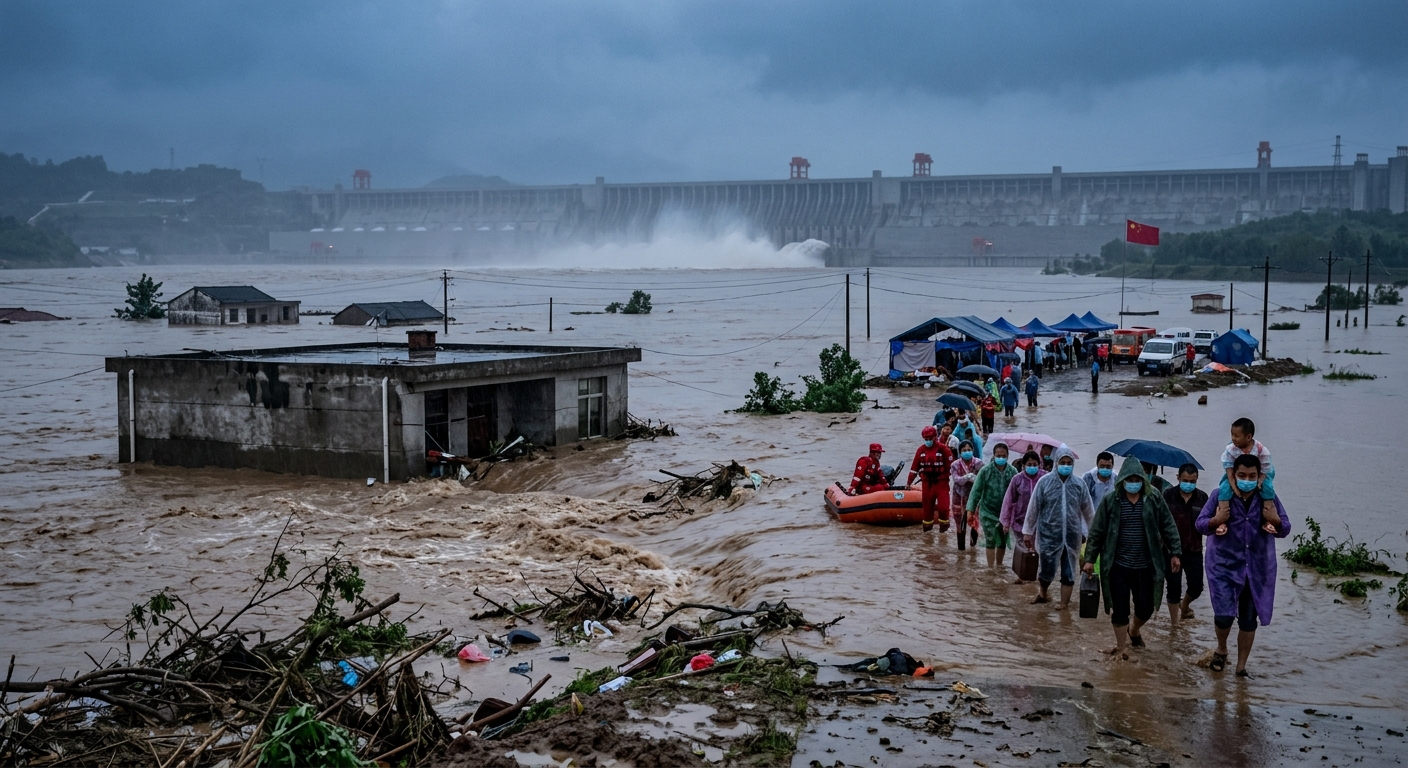
Mainland China has experienced one of its most severe flood seasons in recent memory, driven by an extraordinary convergence of extreme weather patterns, record-breaking rainfall, and infrastructure failures across major southern and central river basins.
- Key Triggers: Record Typhoon Season & Convergence
Triple Typhoons & Atmospheric Convergence: An unusually hyperactive storm season—fueled by a rapidly intensifying El Niño event—produced three concurrent typhoon systems. Moisture feeding in from the Bay of Bengal, the South China Sea, and the Pacific Ocean created a slow-moving, high-volume weather band over southern and central China.
Typhoon Narra's Impact: Typhoon Narra stalled directly over the Beibu Gulf, dropping historic rainfall across Guangxi and surrounding provinces, breaking local rainfall records and flooding entire urban hubs.
- The Drainage Pipeline to the Yangtze River
The River Flow System: Water from southern tributaries and regional river systems (such as those across Guangxi, Hunan, and Hubei) flows north and east, draining directly into the Yangtze River basin.
Yangtze Water Level Spikes: Torrential downpours in Hubei province—where over 330 townships recorded more than 100mm of rain within 48 hours—caused severe flash flooding and pushed immense water volumes down the Yangtze.
- The Three Gorges Dam Capacity Pressure
Three Gorges Dam Flood Pressure
Rising Danger Ceilings: As massive volumes of floodwater surged into the Yangtze, water levels behind the Three Gorges Dam climbed rapidly toward its 175-meter maximum design capacity.
Flood-Control Strain: Emergency management teams activated high-level flood responses across multiple provinces along the Yangtze, forced to carefully manage controlled water releases from the dam to prevent catastrophic downstream flooding in heavily populated cities like Wuhan.
- Infrastructure Failures & Human Impact
The Liulan Dam Collapse: In early July, severe rainfall over the Pearl River catchment overwhelmed the Liulan Reservoir in Guangxi. Two sections of the dam breached, sending a wall of water up to three meters high through downstream villages. Local residents disputed official casualty reports, alleging significant loss of life and describing severe destruction.
Widespread Evacuations: Over 60,000 people were displaced in Guangxi alone, with hundreds of thousands more evacuated or impacted along the broader Yangtze corridor due to rising waters, landslides, and submerged infrastructure.
Ecological Restoration and Long-Term Engineering Responses
Ecological Restoration Efforts
China is a massive landmass and has lots of issues with nature, but scientists in China are known worldwide for working intensely on renewable energy and many other scientific projects that revolve around climate and tackling their issues.
For example, The Great Green Wall of China (officially the Three-North Shelterbelt Program) is the world's largest ecological restoration project:
The Goal: To halt the expansion of the Gobi and Taklamakan deserts, prevent severe sandstorms, and reduce soil erosion across northern China.
The Scale: Launched in 1978 and scheduled for completion around 2050, it involves planting an estimated 88 million acres of forests and vegetation to form a 2,800-mile green barrier across 13 provinces.
Impact: It has significantly increased forest coverage and slowed desertification, though scientists note challenges regarding high water consumption in arid zones.
China is also the world's leader in solar power, and if anyone can collaborate as a nation to tackle nature and climate issues through infrastructure and science, it is President Xi's China.