
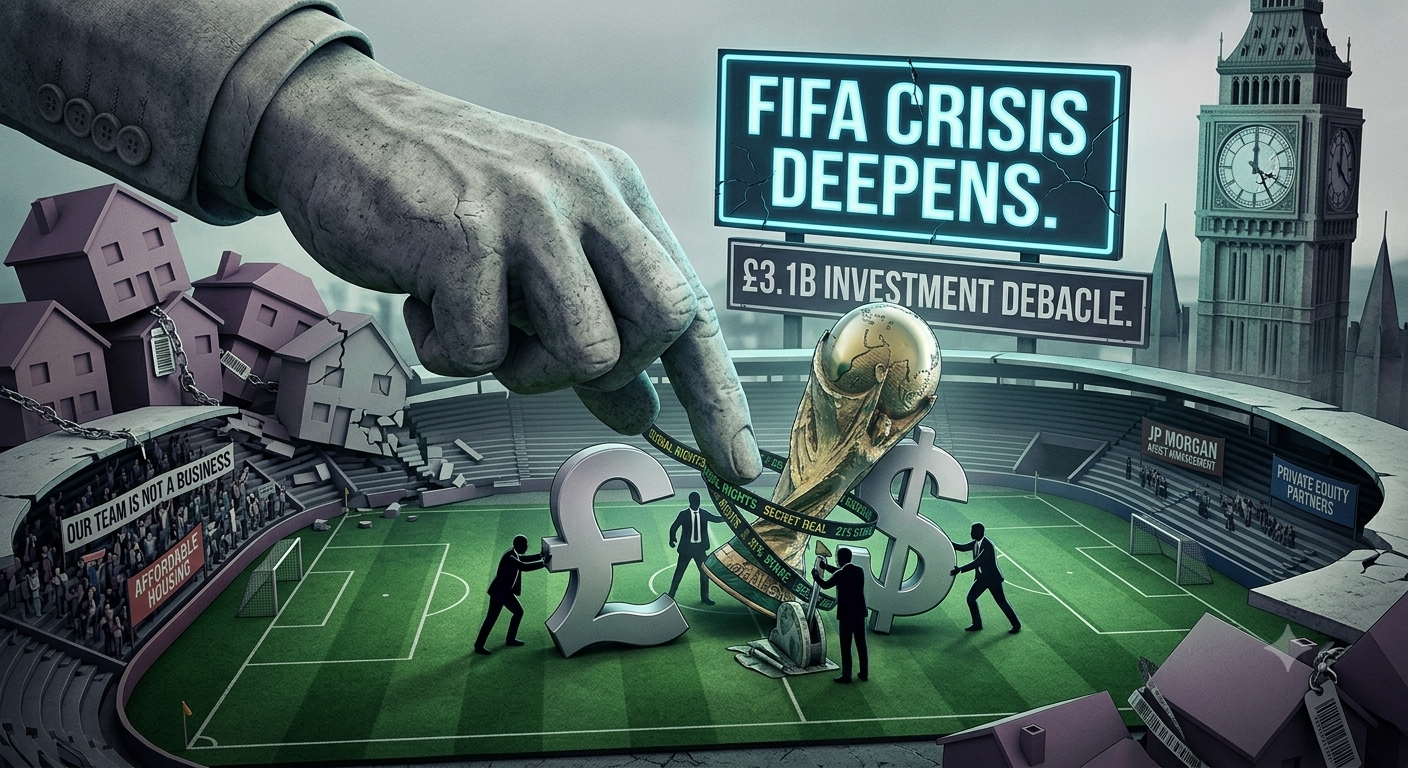
FIFA Crisis Deepens: Infantino Battles to Retain Presidency Following Secret £3.1B World Cup Investment Debacle
FIFA is currently embroiled in one of its most severe institutional crises in years, with President Gianni Infantino facing calls to resign following the exposure of a secret plan to sell private stakes in the World Cup. Key Developments
The Secret Investment Scheme: Reports exposed a hidden £3.1 billion ($4 billion) proposal backed by JP Morgan to sell a 21% stake in future World Cup commercial rights to private equity investors. The deal notably involved connections to Joshua Kushner (brother of Jared Kushner).
UEFA & Regional Backlash: The revelations triggered widespread fury among governing bodies. UEFA unanimously threatened to boycott all FIFA competitions—including upcoming youth and world tournaments—until the plan was scrapped and governance restored.
Call for Resignation: The Norwegian Football Federation, backed by several European nations, explicitly called for Infantino to step down, stating he has lost the institutional trust required to govern.
FIFA & Allies Push Back: Infantino officially pulled the investment proposal off the table and issued an apology for excluding member councils. FIFA released statements asserting that Infantino remains democratically elected, while South American (CONMEBOL) and African (CAF) confederations have reaffirmed their backing for his leadership.
Outlook
With European football authorities threatening legal action and a potential boycott of FIFA events, the governance crisis casts a long shadow over the upcoming FIFA presidential election scheduled for March.
Football/soccer and sport in general over the years has turned from a working-class weekend afternoon pastime to watch the game into something that is more like a business and less affordable for the working-class person, with ticket prices to games inflating massively and pricing the people out of affording to go. With sponsors and advertisements being at the heart of it and big business driving consumerism, recently at the FIFA World Cup in the US they had quarters instead of the typical halftime known in global football/soccer, which was largely driven by advertising. The FIFA Situation in Plain Terms
The Bad Idea: FIFA's boss, Gianni Infantino, secretly tried to sell a portion of future World Cup money/rights to private investors for around £3.1 billion without asking the rest of the board first.
The Backlash: When Europe's biggest football teams and federations found out, they felt betrayed, accused him of trying to make a deal behind their backs, and threatened to boycott tournaments.
The Retraction: Infantino officially canceled the deal and apologized, but the damage was already done.
The Current Fight: European countries (like Norway) are demanding he resign. Meanwhile, FIFA and Infantino's supporters in Africa and South America are refusing to push him out, claiming his enemies are using the controversy to launch a political coup.
It is essentially a corporate power struggle over billions of pounds and control of the world's most lucrative sporting event. The Parallel to Institutional Housing
With JP Morgan at the heart of this FIFA story, we cannot help but be reminded of big financial firms like JP Morgan purchasing homes like they are purchasing stocks. They see real estate/property as an asset class just like stocks, bonds, commodities, and crypto; yet society sees them as homes for people and families to live in, which is particularly an issue for first-time buyers.
Major institutions began deploying billions into buying up entire neighborhoods of single-family starter homes. Critics argued this artificially priced out first-time buyers, outbidding families with cash offers to turn entry-level homes into permanent rentals.
Wall Street's Defense: Banks argued they were filling a credit/housing deficit by funding new build-to-rent developments to increase overall supply.
The Outcome
Public backlash got so intense that federal action stepped in. Congress passed the 21st Century ROAD to Housing Act, which explicitly banned large institutional investors (entities controlling over 350 single-family homes) from purchasing existing single-family starter homes.
In response, JPMorgan pivoted its public real estate stance, launching a major initiative to back $750 billion in housing supply and direct mortgage lending for 200,000 first-time buyers. Capitalist Realities and Cultural Identity
Previous generations, for example baby boomers, did not have this issue so much with entry into buying a home to live in and entry into a stadium at the weekend on an afternoon to watch the sporting game. Yet with capitalism, it is less about everyone having a certain quality of life and more about business. It is important for people to have a home to live in, and with an element of identity attached to supporting their hometown sports team, that is important to people also. Yet in millennial and Gen Z generations, those two things are not as expressible. Is JP Morgan to blame, or is it the capitalistic system itself?