

In London this week, domestic politics was overshadowed on the global stage by the trilateral meeting between America, China and Russia, where President Donald Trump met with China's President Xi and Russia's President Putin. The meeting, where they discussed energy amongst other important political economic topics. Interestingly enough, out of these three global military super powers, two out of three are engaged in serious conflicts with Russia in Ukraine and the US in the Middle East.
UK politics this past week (week ending November 21, 2026) was dominated by a major post-Brexit reset with Brussels, alongside domestic legislative battles and growing foreign-policy pressures on Prime Minister Andy Burnham:
UK and EU Sign Major Trade Reset
Major UK–EU Reset Deal in Brussels: On Friday (November 20), Prime Minister Andy Burnham traveled to Brussels for the UK–EU Summit, signing a new agreement aimed at reducing trade friction and cutting red tape for British exporters. Key pillars of the deal include easing food and agricultural border checks, launching a youth mobility scheme allowing young people to live, work, and study across Europe, and deepening joint border-security cooperation to tackle Channel smuggling gangs. Burnham hailed the agreement as drawing a line under "a decade of drift and division" ten years after the Brexit referendum.
Foreign Policy & Welfare Pressures: Alongside the EU summit and ongoing domestic welfare reform efforts, reports highlighted that Downing Street's primary behind-the-scenes preoccupation this week has been managing fallout from the conflict in Iran and navigating relations with U.S. President Donald Trump.
Parliamentary Flashpoints: In Westminster, MPs debated the Visitor Levy (England) Bill at Second Reading on Monday (November 16)—which would allow regional mayors and strategic authorities to introduce a "tourist tax" on overnight accommodation—facing pushback from both the Liberal Democrats and Reform UK. Committees also scrutinized tech giants (Google, Meta, and Roblox) over the effectiveness of the Online Safety Act and examined parliamentary oversight of UK–EU food check agreements and advanced AI risks.
Security & Policing: Ahead of the weekend, West Midlands Police announced a major pre-planned policing operation in Coventry for Saturday (November 21) in response to expected demonstrations in the city.
FTSE 100 and FTSE 250 Indices Plunge
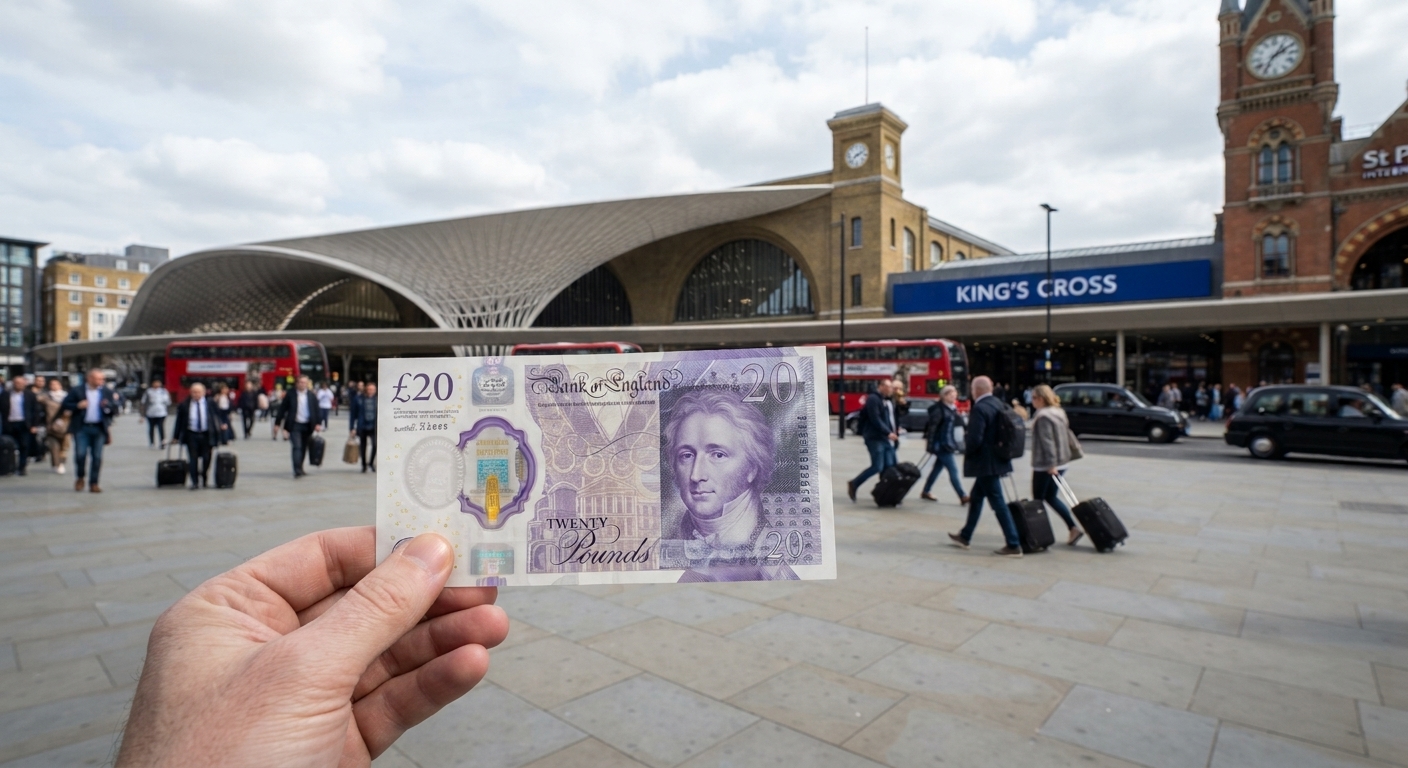
Both London benchmarks suffered a steep sell-off across all five sessions this week (week ending Friday, November 20, 2026) as global risk-off sentiment, an unwind in the US AI trade, and hawkish Federal Reserve rate expectations weighed heavily on UK equities.
FTSE 100 (-5.10% for the week): Opened the week near 10,903 (after hitting an intraday high of 10,962.96 on Monday) and fell every single day, closing Friday at 10,346.34—a loss of 556.22 points from last Friday’s close (10,902.56). Key drivers: Heavyweight defensive names (including AstraZeneca and National Grid) and industrial miners (Glencore, Anglo American, and Antofagasta) dragged the index down amid a sharp copper and metals rout fueled by US dollar strength and repriced Fed rate-hike expectations. Defense and aerospace names like Babcock (+8.15% on Thursday) and Rolls-Royce offered isolated bright spots against the broader slide.
FTSE 250 (-4.62% for the week): Dropped from last Friday’s close of 24,797.60 to finish Friday at 23,651.73—shedding 1,145.87 points, including a sharp -2.23% (-540.48 pt) drop on Friday alone. Key drivers: The domestically focused mid-cap index extended its longest losing streak in a year, pressured by higher-for-longer interest rate fears and broad risk aversion across UK cyclicals, recruiters (PageGroup), and construction/infrastructure names.
Commodities this week: Brent crude oil came down to end the week at $93 dollars a barrel, even though the micro stock narrative taken over the show and no one was really paying attention to the macro economic story. Precious metals seen gold really dismiss that psychological level of $4000 an oz to trade towards $3500 dollars an oz. Silver ended the week to trade at around $41 an oz so a real pivot to reducing exposure to metals.
Global Markets Retreat on Tech Sell-Off
In global stock markets this week we seen the world's benchmark stock index, the S&P 500, drop around 8% in a harsh sell off this week led by technology stocks that have massive exposure to the AI bet on industrial build out, after risk sentiment rapidly changed after the midterms then NVIDIA earning report and the anticipated public offering of Anthropic, ticker name ANT, did little to prop up sentiment. In Asia we also seen selling in the Nikkei 225 in Japan and the Kospi in Korea as their stock markets are heavily exposed to the tech trade. Europe we could have expected for it to maybe have been a hedge from their economies being less exposed to technology, but it seemed this week there is nowhere to hide. Vanguard's MSCI index international, a global stock index, was down 4% on the week.
In global currencies this week, the dollar DXY index had some strength again but with less volume than the prior weeks as things were more micro (stock) than macro (economic) focused this week. The euro and the Great British pound sold off relative to the dollar strength with the pound suffering much more in the sell off as global financial markets became less exposed to risk.
Digital Assets: We had Bitcoin BTC traded as low as $55,000 a coin; if it does break through the $50,000 support level it could be a long way down from there and a big drop. Blue chip alt coins we seen Ethereum ETH to continue to trade under $2000 per coin and Ripples XRP to continue to trade under $1. For some years crypto has been tied to the tech trade, and following the tech sell off this week in digital assets we really seen them on the back foot.



Discussion (0)