
Escalating Border Crises and the European Far-Right Response: From Ceuta to the Port of Dover
Videos circulating on social media show that Ceuta's landscape has dramatically changed from a Spanish-looking European residence to what content creators are describing as a slum, with reports of pollution, violence, and many other issues. Content creators in the UK and other European nations are reporting that the influx of migration is going to come further north, and with that, a major protest of far-right wing demonstrators in all black and balaclavas took to Dover on the south coast of England. Ceuta Migration Crisis
Ceuta Migration Crisis Details
The situation surrounding the Spanish North African enclave of Ceuta is defined by the fallout from a mass border breach that saw an estimated 70,000 to 80,000 migrants cross into the territory from Morocco on foot and by swimming.
Border Status & Returns: The vast majority of those who entered—primarily young Moroccan men—have been returned or voluntarily went back across the Moroccan border. However, several thousand migrants (estimates range between 3,000 and 10,000) remain in Ceuta.
Humanitarian Conditions: Local reception infrastructure remains overwhelmed. Hundreds of migrants, including an estimated 1,200 unaccompanied minors, are sleeping on beaches, in improvised camps, or on the streets, surviving largely on support from local NGOs and the Red Cross.
Diplomatic & Political Fallout: Spanish Prime Minister Pedro Sánchez stated there is no formal evidence that Rabat intentionally orchestrated the surge, though Moroccan border patrols were largely absent during the peak crossing window. Meanwhile, Ceuta's local government requested a national emergency declaration to secure central state and military support.
EU Security Controversy: The event triggered immediate European friction. Italy suspended its Schengen arrangements with Spain over security concerns, prompting Madrid to emphasize that no migrants crossed into mainland Europe because strict identification checks remain active at Ceuta's ports and airports.
Frontex Involvement: Spain has requested assistance from the EU border agency Frontex to help screen and process the remaining individuals held in the city.
Dover Anti-Immigration Protest
Mobilization in Dover
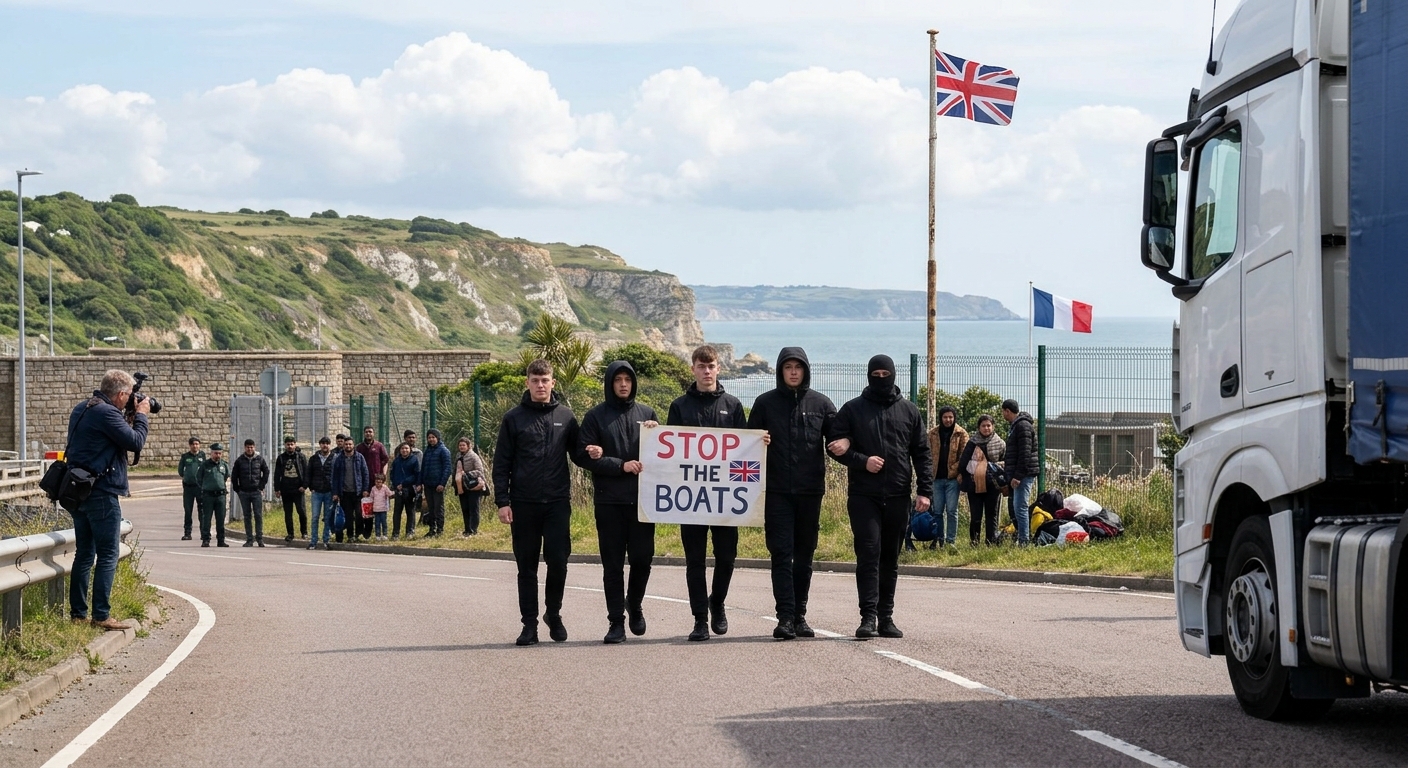
The situation in Dover saw little to no violence, but a very menacing protest where they were seen chanting "stop the boats".
A major anti-immigration protest involving far-right groups occurred at the Port of Dover, causing severe transport disruption and political backlash.
The Incident: Hundreds of demonstrators—mostly young men dressed in black and wearing balaclavas—marched through Dover and coordinated blockades across key access routes, including the A20. They linked arms, chanted slogans like "stop the boats," and brought traffic to and from the UK's busiest ferry port to a standstill.
Disruption & Impact: The blockade caused four miles of tailbacks, 30-minute traffic delays for freight and passengers, and led local business owners in Dover to board up their shops due to safety concerns.
Organization & Organizers: Responsibility was claimed by Patriot Platform, an anti-immigration group. Prominent far-right figurehead Tommy Robinson (Stephen Yaxley-Lennon) reshared live streams of the event, encouraging supporters to join, while other activists linked the action to ongoing frustration over Channel crossings.
Police & Official Reaction: Kent Police characterized the gathering as a "spontaneous protest" and made no arrests, drawing criticism from local council leaders over an "extremely low" initial police presence. Government officials and politicians across the political spectrum condemned the intimidatory behavior and travel disruption, while the Home Office noted that access to the port was fully restored by Saturday afternoon.
The Broader Outlook: Global Orchestration and Ideological Counter-Mobilization
With far-right protests throughout the UK and Europe now, it makes you wonder whether they are partly funded or organized by major global figures and billionaires who have cited that they fear for migration in Europe. Will we see in the future the aggressive-looking left-wing groups such as ANTIFA coming head-to-head with the far-right over political arguments such as immigration?