
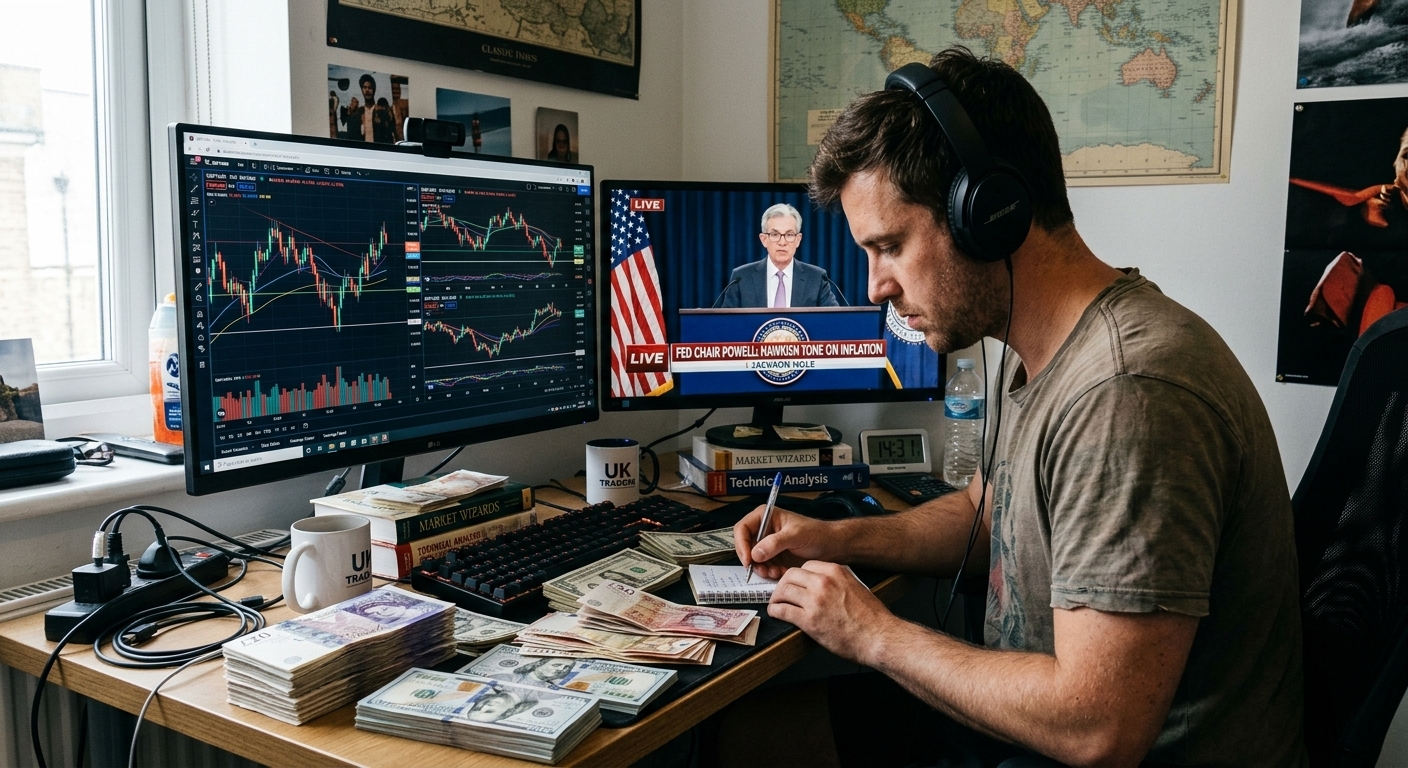
Kevin warsh says.. We should not indulge a regime in which market participants are looking primarily to the Fed for their next trade. A Policy Paradigm Shift: Fed Chair Kevin Warsh Rejects Forward Guidance at Jackson Hole
In his Jackson Hole address, Fed Chair Kevin Warsh addressed forward guidance and market reliance directly:
"We should not indulge a regime in which market participants are looking primarily to the Fed for their next trade."
So, is this the sole reason the Fed Chair is not giving forward guidance? It creates the question: do markets dictate man, or does man dictate markets? That is quite a philosophical economic debate.
He added:
Forward Guidance Has "Outstayed Its Welcome": While forward guidance was necessary during the 2008 financial crisis, it is a "legacy of crises past" that should be strictly limited during normal economic times.
Creating Ambiguity: Constantly telegraphing future rate decisions "risks creating ambiguity in the name of clarity" and limits the Fed's flexibility to adapt to incoming data.
The "Hall-of-Mirrors" Problem: Warning against a loop where traders watch the Fed and the Fed watches traders, he noted: "If markets rely materially on the Fed's guidance and the Fed relies on market prices, we are all more likely to be blinded to new developments."
Is this what makes Kevin Warsh different from other central bankers in his approach to policy, or is this an influence from President Donald Trump, who wanted corporate companies to give less forward guidance by changing earnings reports from quarterly to every six months? A Hawkish Stance and Market Impacts
Fed Chair Kevin Warsh delivered a distinctly hawkish address at the Jackson Hole Economic Symposium:
Hawkish Stance on Inflation: Declared that the Fed’s "predominant focus right now should be on prices." He warned that recent inflation trends show no meaningful improvement toward the 2% target, stating flatly that if disinflation stalls, the Fed has "work to do" (signaling potential rate hikes).
Rejection of Forward Guidance: Doubled down on his "quieter Fed" policy, refusing to offer explicit path or timing hints for upcoming rate decisions.
Financial Conditions & Neutral Rate: Noted that current financial conditions are hard to define as "restrictive," leaving clear scope for further tightening if inflation remains sticky.
Growth Optimism & AI: Struck an optimistic note on long-term productivity, calling artificial intelligence a "hinge point in history" with potential for substantially higher GDP growth.
Market Reaction: Short-term Treasury yields jumped immediately (2-year yield rose to ~4.31%), and the US Dollar strengthened as traders priced in a higher probability of tight monetary policy ahead.
He was hawkish yet added commentary around AI making the economy more productive, which then made the stock market rally. Yet, the Russell 2000 small-cap stock index still suffered as the dollar rose, with small-cap companies being more sensitive to interest rate hikes due to greater dependence on borrowing and having less liquid cash on the sidelines compared to, for example, Google or Amazon.