
US Non-Farm Payrolls Drop in Unexpected Shift as Markets Reaction Fuels 'Bad News is Good News' Rally
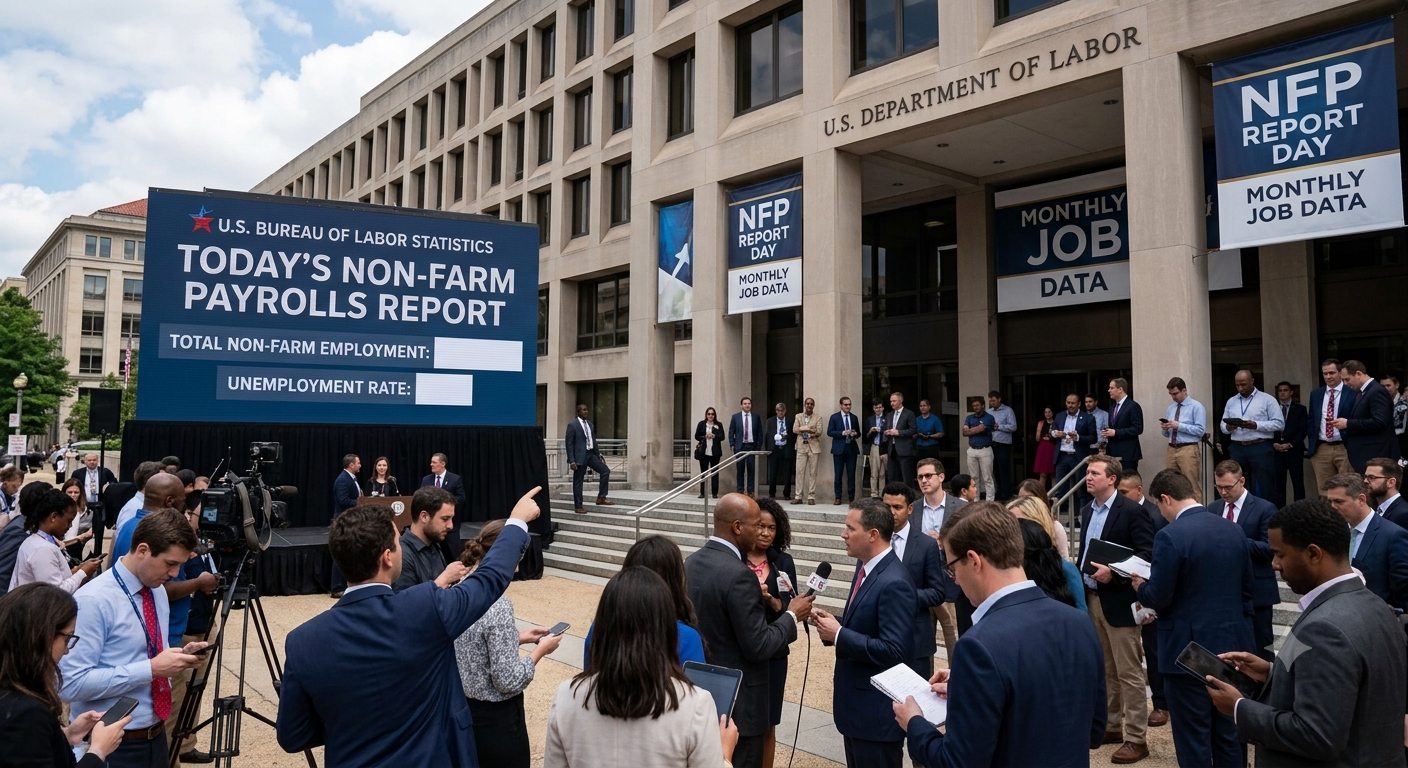
NFP non-farm payrolls dropped today with quite the surprise. Key Headlines & Numbers
Nonfarm Payrolls: -23,000 (Unexpected drop vs. consensus expectations of an +80,000 increase).
Prior Revisions: Massive downward revisions totaling -103,000 for prior months:
May: Revised down by 66,000 (from +129,000 to +63,000).
June: Revised down by 37,000 (from +57,000 to +20,000).
Unemployment Rate: Edged down to 4.1% (from 4.2% in June), primarily driven by a shrinking labor force and participation drops rather than stronger net hiring.
Wage Growth: Average hourly earnings rose 0.1% / +$0.02 month-over-month to $37.62, cooling to 3.2% YoY (the slowest annual pace in over five years).
Participation Rate: Held steady/soft at 61.4%.
Sector Breakdown
Major Drivers of the Decline:
Local Government / Education: -50,000 (largely attributed to typical summer end-of-school-year seasonal adjustments).
Retail Trade: -19,000 (led by cuts at general merchandise stores, warehouse clubs, and gas stations).
Financial Activities: -14,000 (dragged down by credit intermediation and insurance).
Outperformers:
Healthcare & Social Assistance: Added +22,000 jobs.
Construction & Manufacturing: Saw slight continued gains driven by data-center expansion projects.
Market Impact
Treasury Yields & Dollar: 10-year US Treasury yields dropped ~5 bps on the soft data.
Fed Rate Expectations: Market bets shifted toward a lower probability of further Fed tightening/rate hikes, increasing expectations for potential rate cuts as the labor market signals softening.
Expert Analysis
Bloomberg's Michael McKee, widely considered one of the world's main macro data reporters, gave his usual analysis and breakdown. His core analysis focused on three main takeaways:
The Headline Drop: He highlighted that the unexpected -23,000 nonfarm payroll decline, paired with the -103,000 downward revisions, signals a sharp shift in labor market momentum.
Unemployment Rate Caveat: He cautioned against interpreting the drop in unemployment to 4.1% as positive news, pointing out that it was driven by labor force exit rather than strong net hiring.
Fed Policy Implications: He noted that cooling wage growth (3.2% YoY) and broad payroll contraction effectively remove inflation pressures from wages, clearing the path for federal interest rate cuts.
Market Reaction & Macro Outlook
EUR/USD, the world's benchmark risk gauge, became quite bullish after the data dropped. The DXY moved bearish, while US stocks moved bullish. With softer labor market data today acting as a leading indicator for the next inflation print to be revised down, the market has taken it as quite the risk-on move—known in times of inflation as "bad news is good news"—with the market pricing in fewer chances of Fed rate hikes.
The S&P 500 and the Nasdaq did not display as clean a move as the FX pairs and were more choppy, which is understandable given it runs against the current short-term macro trend of a stronger dollar based on rate hike bets. The major move, even on currency pairs, looked like it occurred within the first one-minute candlestick rather than a sustained trend, which is once again warranted given it goes against the current macro trend.
One thing also to consider—and has been noted for a while in labor market data—is that AI and automation may be affecting figures, as firms are often not letting people go, but rather slowly hiring less.
Anyhow, one softer labor market print is not what the Fed and central banks around the world want to see unless the inflation data itself shows a firm trend of coming down. Perhaps if the labor market data had been exceptionally strong, signaling a robust economy and further inflation, it might have triggered a massive risk-off environment and dollar strength today inline with the current macro trend.