Nvidia Partners With Wall Street Giants to Fund Their Own Customers is it circular finance ? The GPU Conundrum: Investable Asset or Depreciating Hardware?
Nvidia is claiming compute is a productive investable asset. So does that mean GPU (graphics processing units) hardware is like gold, real estate, or other assets? But do they not already have shares in the company ticker name NVDA that are an investable speculative asset?
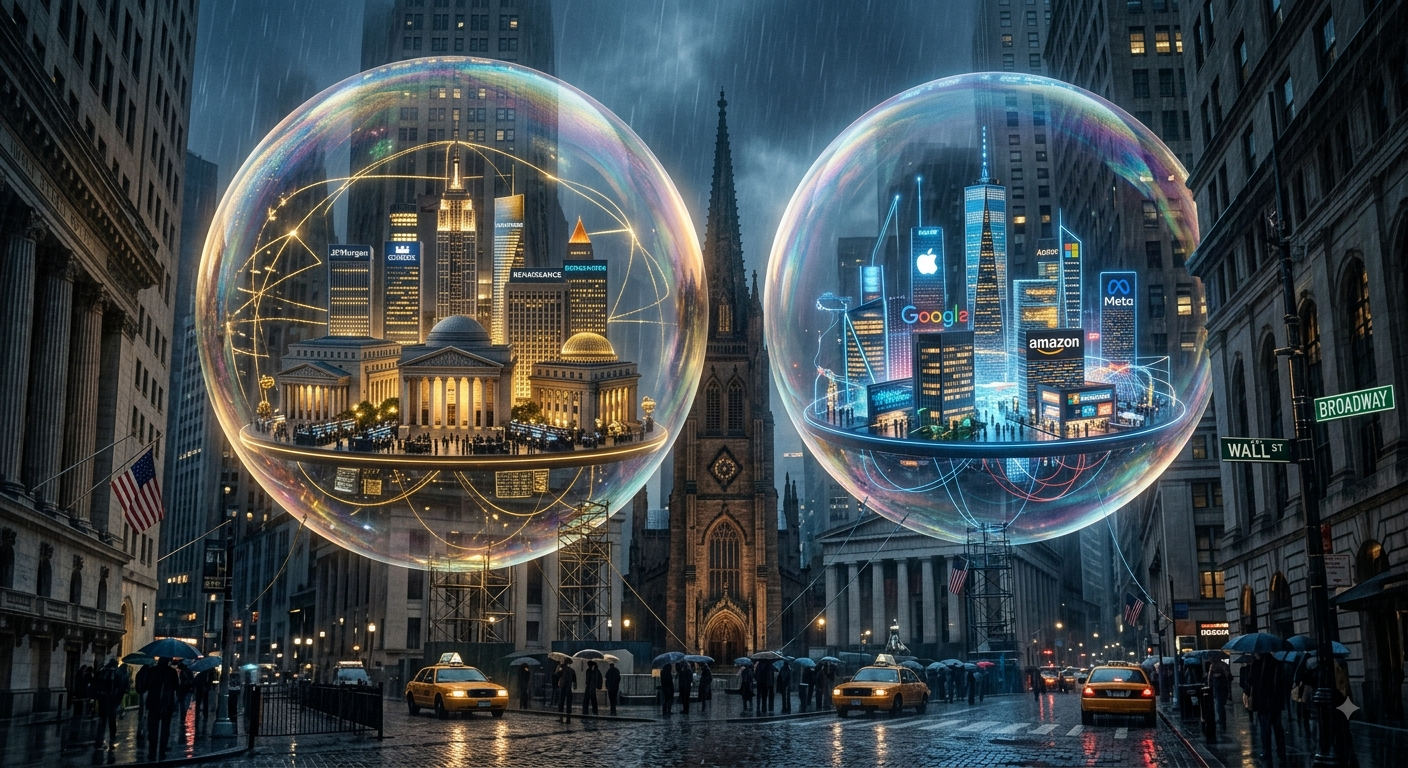
And once again, circular finance in stock markets is up for debate. Wall Street's $500B Vendor Financing Model
Nvidia is helping orchestrate financing rather than putting up its own cash balance sheet.
Third-Party Capital: The $500 billion is being raised and underwritten by private equity and Wall Street firms (BlackRock, Apollo, KKR, etc.).
The Goal: These financial institutions create dedicated debt and infrastructure credit funds so Nvidia’s customers (AI labs, cloud providers, enterprises) can borrow money at attractive rates to purchase Nvidia chips and build data centers.
The Takeaway: Instead of direct vendor financing (Nvidia lending its own cash), Nvidia is acting as a facilitator—structuring AI hardware as an "investable asset class" for Wall Street to fund Nvidia's customer purchases.
Is it "borrowing from Peter to pay Paul"?
Think of it like buying a house:
Instead of Nvidia lending buyers the money directly, Nvidia is acting like the mortgage broker. It brought in six big banks and investment firms (like BlackRock and Goldman Sachs) to set up a $500 billion "mortgage fund."
Now, companies that want to build giant AI data centers can borrow money from these big investors specifically to buy Nvidia’s expensive chips and equipment.
For Nvidia: They sell more chips without risking their own cash balance sheet.
For the Investors: They get steady, long-term returns from funding the AI boom.
For the Buyers: They don't have to pay all the cash upfront to build huge AI facilities.
From Crypto Hashrates to AI Compute
Who remembers before the AI revolution when Nvidia went from only being known for gaming graphics cards to PoW (proof-of-work) crypto mining, like Ethereum before 2022 went to PoS (proof-of-stake), and a hashrate dictated the amount of crypto you could mine?
The ROI (return on investment) at the time on mining with a graphics card was around 8 months plus, and then the GPU tended to have around another 8 months left in it before the hashrate spiked, driving down individual payouts. New GPUs coming to the market made your hardware unprofitable after a certain time—maybe a year and a half to two years max—leaving older models not much use.
And the same principle now is still in place; it's just powering AI and not crypto mining, and it's bigger, more expensive GPUs.
Instead of individuals chasing a "hashrate" to mine crypto, big tech companies and cloud providers are chasing compute power to train and run AI models:
Short Tech Lifecycle: Just like crypto mining rigs, AI chips (like Nvidia's H100s or Blackwell B200s) become outdated within 2 to 3 years as newer, far more efficient chips replace them.
Payback Period: Enterprise AI GPUs rented out via cloud services target an ROI/payback period of roughly 8 to 12 months.
The Scale Difference: Instead of retail miners building rig frames in their spare rooms, massive funds and tech giants are spending hundreds of billions to build industrial-scale data center "farms."
We know that there were big companies doing crypto mining at scale bundling graphics cards together in industrial-like rigs, but it was not at the same scale as the whole world's economy adopting AI, with artificial intelligence technology having a much bigger real-world utility than cryptocurrencies.
Maybe the crypto mining with Nvidia GPUs was an important part of the story incrementally to get Nvidia and the manufacturing and development of GPUs where it is today to get to the AI boom and the new industrial revolution?
And gaming graphics has definitely done this. Who would have ever thought that gaming graphics would be the future of humanity and the economy? For example, self-driving cars are like a simulator, and it's thought humanoid robots are going to work like a simulator.
The shift from traditional gaming graphics to modern AI is the difference between rendering pixels for human eyes and processing real-world environment data for machine decision-making. How Self-Driving Cars Work Like a Simulator
Virtual Test Drives: Instead of driving millions of physical miles, companies build hyper-realistic 3D video game worlds using game engines like Unreal Engine or NVIDIA Drive Sim.
Synthetic Data Generation: The car's AI "drives" inside this simulator. Developers can dynamically create extreme weather, bad lighting, or sudden hazards (like a pedestrian stepping off a curb) to train the AI safely.
Closing the Loop: The virtual sensors (cameras, LiDAR) feed data into the self-driving software, which makes steering and braking decisions just as it would in the physical world.
The Visionary Bet
Elon Musk said that we are in a simulation with the simulation theory, and exactly 10 years ago in August 2016, Nvidia CEO Jensen Huang hand-delivered the world's very first dedicated AI supercomputer, the DGX-1, directly to Elon Musk at OpenAI at the time when Elon Musk was a co-founder with Sam Altman, OpenAI being famous for ChatGPT.
Maybe the issue is calling hardware an investable asset is a bit up for question, as it's often seen as a depreciating asset. Another example of a depreciating asset, and maybe one of the best outside of tech and in another sector of the economy (automotive), is an automobile, the car—possibly the best-known example of a depreciating asset to put it in simple terms.
Despite this, Nvidia is an amazing company with a fantastic story, narrative, and founder/CEO Jensen, who is a visionary. He has had his ups and downs at the start and was not always the world's most valuable market cap company, recently taking over Apple with their long reign as the world's most valuable company.
Nvidia is at the forefront of the economy's new AI agent economy and new industrial revolution. So whether the financing is up for question in the short term, in the longer term they are looking to change life itself, replace much of human labor in industry, and much more. It's like in the 2000 .com bubble—Microsoft would have taken a hit and share prices would have dropped, but I'm sure Microsoft (MSFT) will still be around in the future in another 25 years, say 2050. Technologies change and disruption happens, but humans often work on trust and reputation.
Innovation needs financing, yet markets will always question it, and markets don't lie: they find the current best price of all assets.